건강Mar 20268 min read

RSI 예방을 위한 음성 타이핑: 개발자의 통증 없는 생산성 가이드

반복 사용 긴장성 손상은 경력을 끝냅니다. 음성 타이핑은 진정한 대안을 제공합니다.

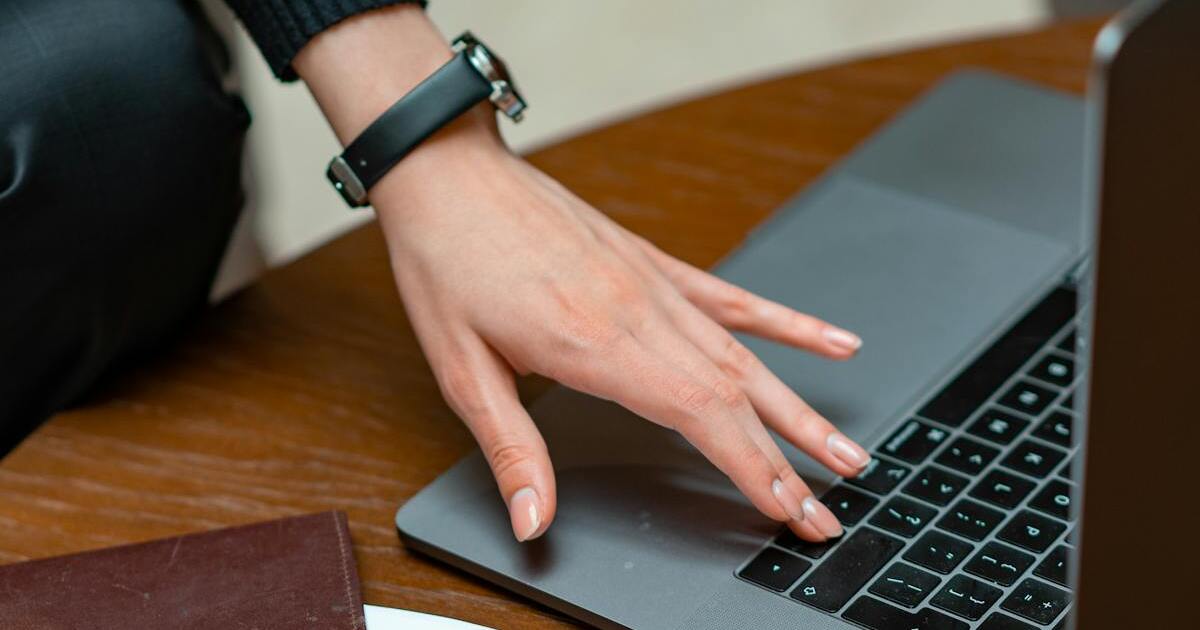
Person typing on laptop keyboard

If you type for a living, you've probably felt it. That dull ache in your wrists after a long coding session. The tingling in your fingers during a writing marathon. The stiffness that creeps up your forearms and settles in your elbows.

For most people, the warning signs start small. You shake out your hands, adjust your chair, maybe buy an ergonomic keyboard. But the underlying problem doesn't change: you're asking your hands to make thousands of tiny, repetitive motions every single day.

That problem has a name. It's called repetitive strain injury (RSI), and it affects roughly 1.8 million workers in the US alone each year, according to the Bureau of Labor Statistics. Among software developers and professional writers, the numbers are even higher.

The good news: voice typing has matured to the point where it's a genuine alternative for large portions of your daily work. Not a gimmick. Not a compromise. A real tool that lets you rest your hands while staying productive.

What RSI actually does to your body

RSI is an umbrella term for several conditions caused by repetitive motion. The most common ones for keyboard workers are:

  • Carpal tunnel syndrome – compression of the median nerve in the wrist, causing numbness, tingling, and weakness in the hand
  • Tendinitis – inflammation of the tendons in the wrist, forearm, or elbow
  • De Quervain's tenosynovitis – pain on the thumb side of the wrist, common in people who use trackpads heavily
  • Cubital tunnel syndrome – nerve compression at the elbow, often from resting elbows on a desk while typing

These aren't minor inconveniences. Left untreated, RSI can become chronic. Some developers have had to leave the industry entirely because they can no longer type without pain. The subreddit r/RSI is full of stories from programmers in their 20s and 30s who didn't take early symptoms seriously.

The brutal truth: if your career depends on a keyboard, RSI is an occupational hazard you need to actively manage.

Why ergonomic keyboards aren't enough

Split keyboards, vertical mice, standing desks, wrist rests. These all help, and you should use them. But they address the symptoms while leaving the root cause intact: the sheer volume of keystrokes.

A typical software developer makes between 5,000 and 10,000 keystrokes per hour during active coding. A writer producing 2,000 words of prose hits roughly 12,000 keystrokes. Over an eight-hour day, that's tens of thousands of repetitive finger movements.

An ergonomic keyboard spreads that load more evenly across your hands. It doesn't reduce the total number of keystrokes. To meaningfully lower your RSI risk, you need to eliminate keystrokes, not just redistribute them.

That's exactly what voice typing does.

How voice typing reduces RSI strain

The math here is simple. Every word you speak instead of type is a word your hands don't have to produce. If you can shift even 30-40% of your daily text output to voice, you're cutting your keystroke count by thousands per day.

But the benefits go beyond raw keystroke reduction:

Rest periods built into your workflow

When you alternate between typing and voice input, you're creating natural micro-breaks for your hands. Instead of eight straight hours of keyboard work, you're doing four or five hours of typing interspersed with voice. Your tendons get recovery time without you needing to stop working.

Less mouse/trackpad usage

A lot of RSI comes not from the keyboard itself but from constantly switching between keyboard and mouse. Voice input for text-heavy tasks means fewer context switches, fewer reaches for the trackpad, and less strain on your dominant hand.

Better posture

When you're dictating, you can lean back. Stretch. Stand up. Walk around your room while talking. You're no longer hunched forward over a keyboard. The postural benefits compound over time.

What tasks work well with voice typing

Let's be honest: you're not going to voice-dictate a complex SQL query or a regex pattern. Voice typing works best for natural language output, which is a bigger part of your day than you probably realize.

For developers

  • Commit messages and PR descriptions
  • Code comments and documentation
  • Slack and Teams messages
  • Jira tickets and bug reports
  • AI prompts (Cursor, Claude, ChatGPT)
  • Email replies
  • README files and technical writing

For writers and content creators

  • First drafts of articles and blog posts
  • Email correspondence
  • Social media posts and captions
  • Notes and brainstorming sessions
  • Client communications
  • Outlines and content planning

Building a voice-first RSI prevention routine

Week 1: Start with messages

Use voice input exclusively for Slack messages, email replies, and chat. These are low-stakes, conversational, and easy to dictate. You'll build muscle memory for the activation gesture without any pressure.

Week 2: Add documentation

Start dictating commit messages, code comments, and documentation. This is where you'll notice the biggest keystroke savings. A well-dictated commit message takes two seconds. Typing the same thing takes 15-20 seconds.

Week 3: First drafts by voice

Try dictating the first draft of longer pieces: blog posts, technical specs, project proposals. Don't worry about perfection. Speak your thoughts, then edit on keyboard. The editing pass is much lighter on your hands than writing from scratch.

Week 4: AI prompts and beyond

This is the hidden multiplier. Dictate your AI prompts instead of typing them. Longer, more detailed prompts produce dramatically better output from tools like Claude, ChatGPT, or Cursor. Your voice is faster than your fingers, so you'll naturally write better prompts without it feeling like extra work.

Getting started with Talkpad

Talkpad was built with exactly this use case in mind. It uses cloud AI for fast, accurate transcription (~200ms latency) . It works in every app through a global hotkey. It handles technical vocabulary well.

If you're dealing with RSI symptoms, or you want to prevent them before they start, voice typing is one of the most impactful changes you can make to your daily workflow. It's not about replacing your keyboard entirely. It's about giving your hands the rest they need while you keep working.

Share

Talkpad를 무료로 체험하세요.

무료 플랜 제공. 약정 없음. 더 빠른 타이핑.

macOS · Windows · 99개 언어 · 무료 플랜