Best Voice Dictation for Developers in 2026: Coding, Docs, and AI Prompts
Developers write more than code: specs, PR reviews, tickets, docs, standups, and AI prompts. Here is how to choose a voice dictation workflow that actually fits engineering work.
Apr 2026 · 8 min read
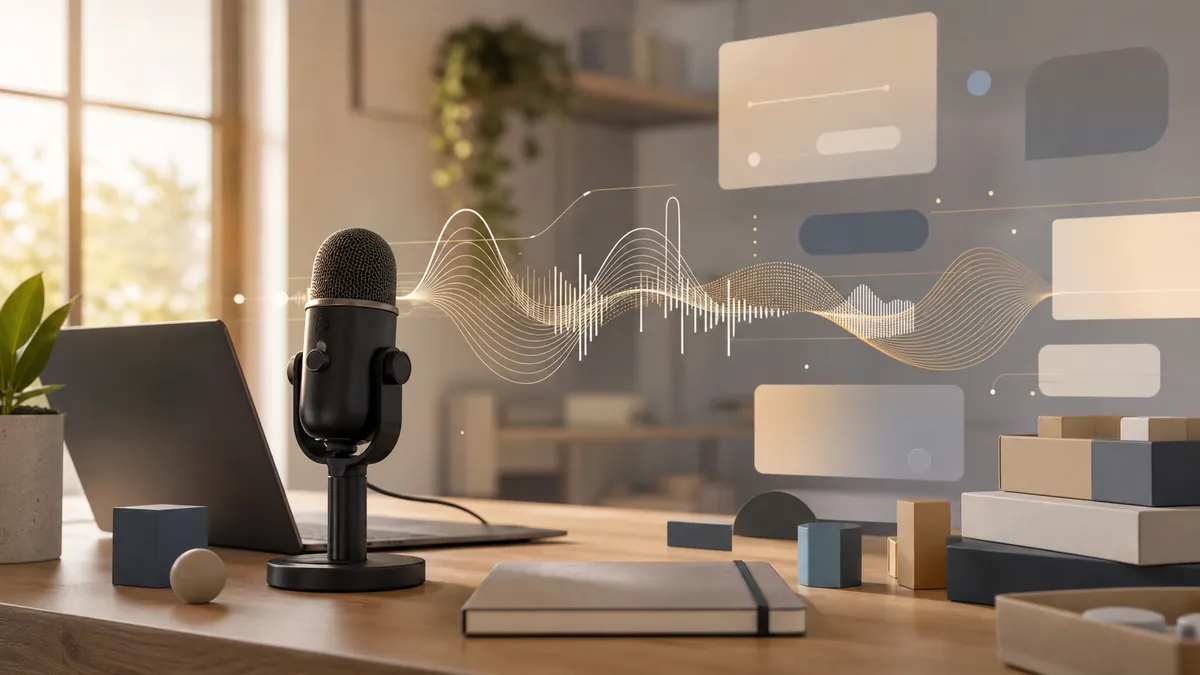
Developers do not only write code. A normal engineering day includes issue descriptions, pull request reviews, design notes, incident updates, Slack explanations, API docs, commit messages, standup summaries, and increasingly, long prompts for AI coding tools. The keyboard is still essential, but a lot of developer writing is prose about code rather than code itself.
That is why voice dictation is starting to matter for software teams in 2026. Recent comparison pages for speech-to-text tools keep ranking general dictation apps, and developer-specific guides are beginning to appear. The gap is that engineering work has different constraints. A developer does not just need accurate text. They need a workflow that handles technical vocabulary, preserves structure, works inside every app, and does not interrupt the deep focus required to reason about a system.
This guide is for developers, engineering managers, founders, and technical writers who want to use voice without turning their workflow into a gimmick. The goal is not to dictate source code all day. The goal is to remove friction from the writing that surrounds code, so more context gets captured while it is still clear.
Why developers write more than they think
Software teams run on written context. A bug report explains what happened, what was expected, what changed, and how to reproduce it. A pull request explains why a change exists and what tradeoffs it makes. A design doc helps people debate architecture before implementation starts. A production incident update tells the rest of the company what is known, what is being investigated, and when the next update will arrive.
None of this is optional. Teams that avoid writing usually pay later with repeated questions, vague tickets, hidden decisions, and PRs that are difficult to review. The problem is that engineers are often most articulate when talking through a system out loud. They can explain a tricky bug to a teammate in thirty seconds, then spend ten minutes trying to type the same explanation into Linear.
Voice dictation is useful because it captures that spoken clarity. You can talk through the bug, the tradeoff, or the reproduction steps while the reasoning is fresh, then edit the output into precise technical prose. It moves the first draft closer to the speed of thought.
Where voice helps most in an engineering workflow
Issue descriptions and bug reports
A good bug report is structured: environment, steps to reproduce, expected behavior, actual behavior, logs, and suspected cause. Dictation works well here because you can describe what you just saw without losing details. Say the steps in order, then add screenshots, links, or stack traces with the keyboard.
Pull request reviews
PR review comments need to be clear, kind, and specific. Typing them can feel slow enough that reviewers leave terse notes like “nit” or “why?” Voice makes it easier to leave the useful version: “I think this should live in the parser layer because the API client should not know about markdown. Could we move the normalization earlier and add one fixture for nested lists?”
Design notes and technical decisions
Architecture work benefits from talking. When you explain an option out loud, the weak parts often reveal themselves. Dictating a rough design note into Notion, Google Docs, or a GitHub discussion gives you something to refine instead of staring at a blank page.
AI prompts for coding tools
AI coding assistants reward context. The best prompts include the goal, constraints, files to inspect, edge cases, and how to verify the result. That is a lot of text. Voice is often the fastest way to produce a detailed prompt without dumbing it down into a one-line request.
Do not try to dictate code first
The biggest mistake is treating voice dictation as a replacement for every keystroke. Code has punctuation, nesting, symbols, and precise names. Some people can dictate code with specialized systems, but most developers get more value by dictating the prose layer around the code.
Use the keyboard for source code, navigation, refactors, terminal commands, and exact edits. Use voice for explanations, plans, comments, test descriptions, prompts, review feedback, and status updates. That split keeps dictation practical. You are not fighting the tool to say braces and brackets. You are using it where natural language is already the right interface.
What to look for in a developer dictation tool
System-wide input. Developers move between Cursor, VS Code, terminals, GitHub, Linear, Slack, Notion, Google Docs, ChatGPT, Claude, and browser forms. A dictation tool should follow the cursor instead of forcing you into a separate editor.
Fast push-to-talk. Engineering work is interrupt-sensitive. If the tool takes several seconds to wake up, you will stop using it. The best workflow is muscle memory: press a hotkey, speak, release, and see cleaned text appear in place.
Technical vocabulary support. The tool should cope with terms like Kubernetes, Postgres, OAuth, embeddings, TypeScript, monorepo, WebSocket, and product-specific names. You will still edit, but you should not have to fix every other noun.
AI cleanup without flattening your voice. Raw transcripts include restarts, fillers, and half-finished sentences. Good cleanup removes that noise while keeping the meaning precise. For engineers, it should preserve bullets, numbered steps, and technical terms.
Cross-platform support. Many teams mix macOS and Windows. A tool that works across both makes adoption easier for engineering managers and founders who want a shared habit rather than a personal hack.
A practical setup for one week
Start with three use cases, not every writing task. First, dictate bug reports directly where your team tracks work. Second, dictate PR review comments when a comment needs more than one sentence. Third, dictate prompts for AI coding tools when you want a careful answer instead of a quick guess.
At the end of each dictation, edit before sending. This is important. Voice is a faster drafting method, not permission to send unreviewed thoughts. Check names, numbers, file paths, commands, and anything that could change the meaning of a technical decision.
Talkpad fits this workflow because it acts like a system-wide voice keyboard for macOS and Windows. Put the cursor in Linear, GitHub, Slack, Cursor, or an AI chat box, hold a hotkey, speak naturally, and the cleaned-up text appears there. The free plan includes 2,500 words per week, which is enough to test it on real engineering work, and Pro is $8 per month or $6 per month annually.
Example prompts and snippets to try
For a bug report, try: “Write this as a clear bug report. In production, when a user changes their billing email and immediately retries checkout, Stripe returns a stale customer email. Expected behavior is that the invoice uses the updated email. Actual behavior is that the old email appears on the invoice. Include reproduction steps and a note that we should inspect webhook ordering.”
For a PR review, try: “Turn this into a constructive review comment. I like the direction, but I am worried the cache invalidation now depends on the UI route. Suggest moving the invalidation into the mutation layer and adding a test that covers both the settings page and the onboarding flow.”
For an AI coding assistant, try: “I want you to inspect the authentication middleware and find why refresh tokens sometimes fail after a deploy. Do not make changes yet. Summarize the likely control flow, list the files you inspected, and propose the smallest safe fix with a test plan.”
How managers should evaluate it
Do not measure only typing speed. Measure whether tickets contain more context, PR reviews are more helpful, design notes appear earlier, and AI prompts become more specific. The real productivity gain is not that someone can produce words faster. It is that important engineering context stops being trapped in people’s heads.
For teams, run a small pilot with engineers who already write a lot: tech leads, staff engineers, support engineers, founders, and engineering managers. Ask them to use voice for one week on tickets, reviews, docs, and prompts. Then compare output quality, review cycle time, and how much writing they avoided postponing.
Also watch for the small cultural change. When writing becomes easier, engineers leave more context for the next person. A reviewer explains the reason behind a suggestion. A tech lead writes the migration note before the details fade. A founder gives an AI agent the full problem instead of a rushed instruction. Those extra paragraphs often prevent hours of confusion later.
The bottom line
The best voice dictation tool for developers is not the one that promises to replace coding. It is the one that makes the communication around coding easier: clearer tickets, richer PR reviews, better docs, sharper AI prompts, and faster status updates.
If your engineering work lives across apps, choose a system-wide voice keyboard, keep the keyboard for exact code, and use voice where natural language already belongs.
That balance is simple enough to become a daily habit, which is why it tends to last after the novelty fades.
Download Talkpad for free – 2,500 words/week on the free plan.
 Download for macOS
 Download for Windows