Voice vs. Typing: Why Speaking Is 5x Faster Than Your Keyboard
The science behind why your voice outpaces your fingers – and what it means for how you work every day.
Feb 2026 · 6 min read
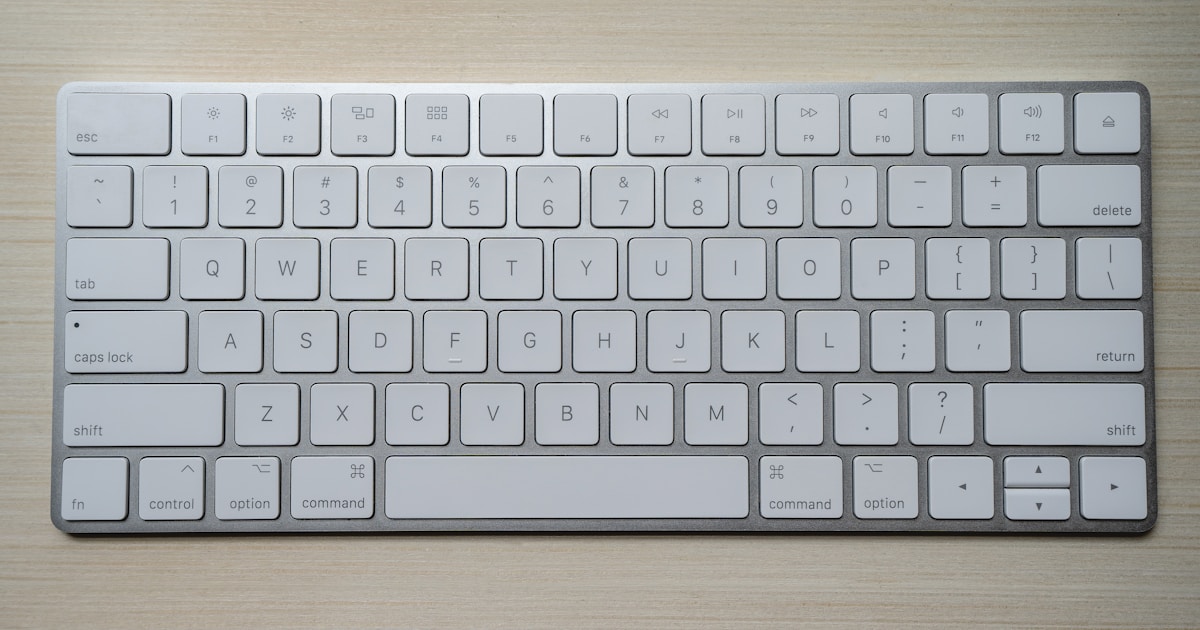
If you ask someone how fast they type, they'll usually guess higher than the truth. The average office worker types around 40 words per minute. Developers – who type all day – average closer to 60. Professional typists reach 80-100 WPM. The record holder has hit 212 WPM, but that's about as representative of the average person as Usain Bolt is of commuters.
Now ask yourself: how fast do you speak?
The average conversational speaking speed is 130 words per minute. Presenters and podcasters typically land between 140-160 WPM to sound engaging without losing their audience. That's not a record – that's just ordinary human speech.
The gap is enormous. Even a skilled typist at 80 WPM is operating at roughly 60% of their speaking speed. For the average person typing at 40 WPM, voice is more than 3x faster. Factor in backspacing, correcting typos, and the cognitive overhead of translating thought into typed words – and the real-world advantage of voice is closer to 5x.
Why your fingers can't keep up with your brain
Typing is a two-step process: you think the thought, then you translate it into a sequence of individual keystrokes. Each key is a separate motor action – a distinct finger movement your brain must plan and execute.
Speech is fundamentally different. Your brain produces language as a continuous stream. The muscular coordination required for speech is deeply hardwired – you've been doing it since you were two years old. You don't consciously plan each phoneme the way you consciously select each key. Speaking is closer to thinking out loud than it is to writing.
Typing requires you to translate thought into a motor sequence. Speaking doesn't. It's the same thought – expressed directly.
The accuracy argument
The classic objection to voice input is accuracy. "What if it gets it wrong?"
This was a legitimate concern in 2015. It's not in 2026.
Modern transcription models – used by leading voice apps – achieve accuracy rates above 95% in real-world conditions. That's better than the average typist's raw accuracy before backspacing. The key difference: voice errors are mostly predictable and contextually obvious, while typos can be invisible until someone else reads your work.
The speed comparison, properly measured
Let's run an honest comparison. Suppose you need to write a 100-word email reply.
| Method | Raw speed | Correction time | Total time |
|---|---|---|---|
| Average typist (40 WPM) | 2m 30s | ~30s | ~3 min |
| Fast typist (80 WPM) | 1m 15s | ~15s | ~1.5 min |
| Voice input (130 WPM) | 46s | ~10s | ~56 seconds |
For an average typist, voice input saves roughly two minutes per 100-word message. If you write 20 messages a day, that's 40 minutes saved daily – from a single habit change.
Why we still type everything
If speaking is so obviously faster, why does the world still type?
Three reasons: social context, tool friction, and habit.
Social context: speaking out loud at your desk disturbs colleagues. Open-plan offices made voice input impractical for most of the era when it became technically possible. This is changing rapidly – more people work from home or in private offices, and earbuds have made quiet, directed speech a socially normal act.
Tool friction: until recently, using voice input meant opening a dedicated app, clicking a record button, waiting for a cloud API, copying the result, and pasting it. That workflow was slower than typing for anything under 50 words. The friction erased the speed advantage.
Habit: keyboards are deeply ingrained. We've been typing since childhood. The idea of speaking into a computer still feels slightly strange to many people, even though those same people spend hours a day speaking into their phones to friends.
Getting started today
The fastest way to experience the difference is to just try it. Download Talkpad, grant microphone and accessibility permissions, and use it for email for one afternoon. That's enough time to feel the shift.
Your typing speed took years to develop. Voice input doesn't need practice – you've been speaking fluently for decades.
 Download for macOS
 Download for Windows